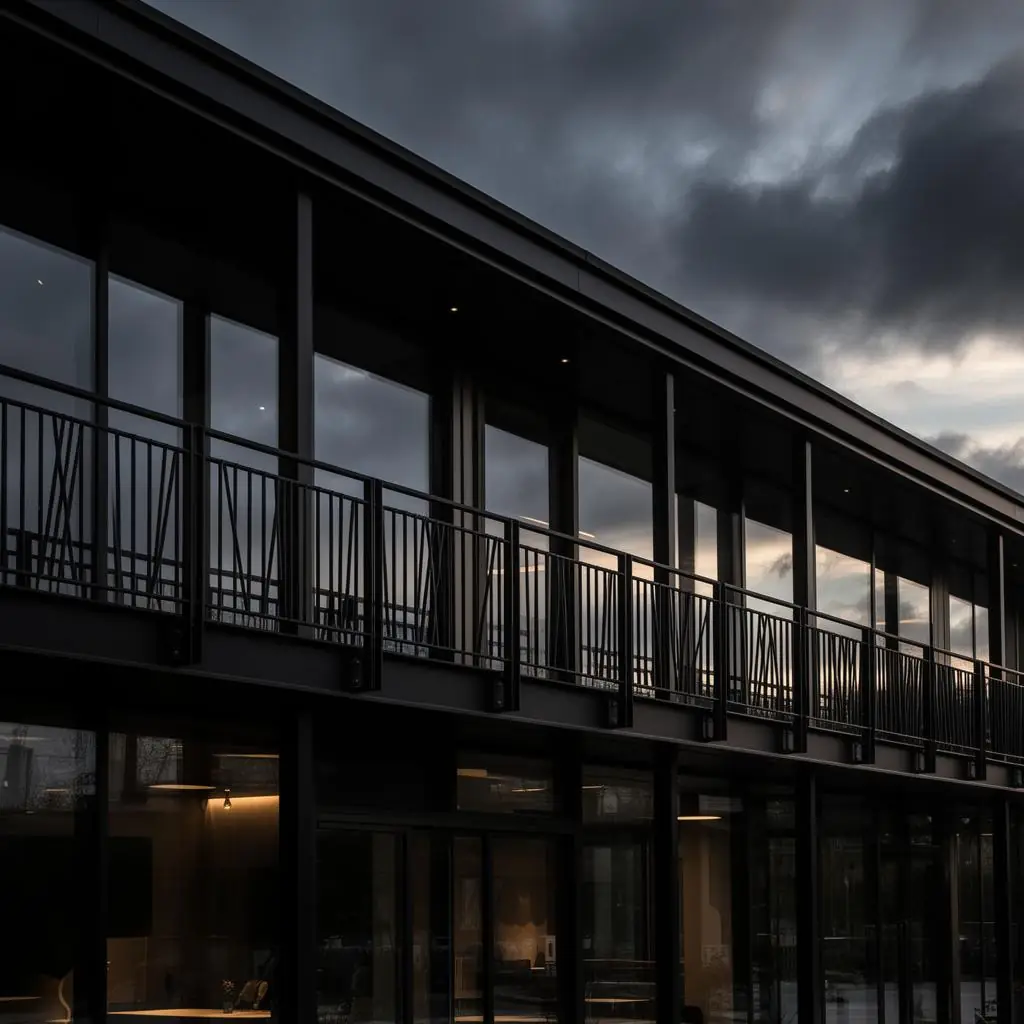
Accessible Handrails
ADA-Compliant Railings & Handrails in Rhode Island
Iron Penguin Builders fabricates and installs ADA-compliant railings and handrails for businesses, public buildings, and residential properties throughout Rhode Island. The 2010 ADA Standards set specific handrail dimensions for accessibility, and we build each installation to them.
The Short Answer
ADA railings are handrails built to the 2010 ADA Standards (§505) for businesses and public places: 34 to 38 inches high, a 1-1/4 to 2 inch graspable rail, on both sides of stairs, with 12-inch extensions at the top and one tread depth at the bottom. The ADA covers public accommodations and commercial facilities, not private homes, though homeowners can choose ADA dimensions for aging in place. Iron Penguin Builders fabricates and installs ADA handrails across Rhode Island, with free on-site assessments.
Key Facts
- Who must comply
- Public accommodations and commercial facilities; not private homes or religious organizations
- Height & grip
- 34–38 in above stair nosing; 1-1/4 to 2 in round diameter
- Stair extensions
- 12 in horizontal at top; one tread depth at stair slope at bottom
- Stairs
- Handrails on both sides; continuous; non-rotating; return to wall, guard or floor
- Ramps
- Handrails on both sides of ramps rising more than 6 in
- Finishes
- Paint (several options), powder coating, hot-dip galvanizing, epoxy coatings or clear coat
- Service area & estimates
- All of Rhode Island; free on-site assessment
ADA Railing Requirements We Meet
Our ADA-compliant railings are built to federal and state accessibility standards, including:
- Continuous graspable handrails on both sides of stairs and of ramps rising more than 6 inches
- Handrail height between 34 and 38 inches above the stair nosing
- 1.25 to 2 inch handrail diameter for proper grip
- Handrail extensions: 12 inches horizontal at the top, one tread depth at the stair slope at the bottom
- Return-to-wall or post terminations to prevent snagging
- Non-rotating handrails firmly secured to the structure
- Smooth, continuous surfaces with no sharp edges or obstructions
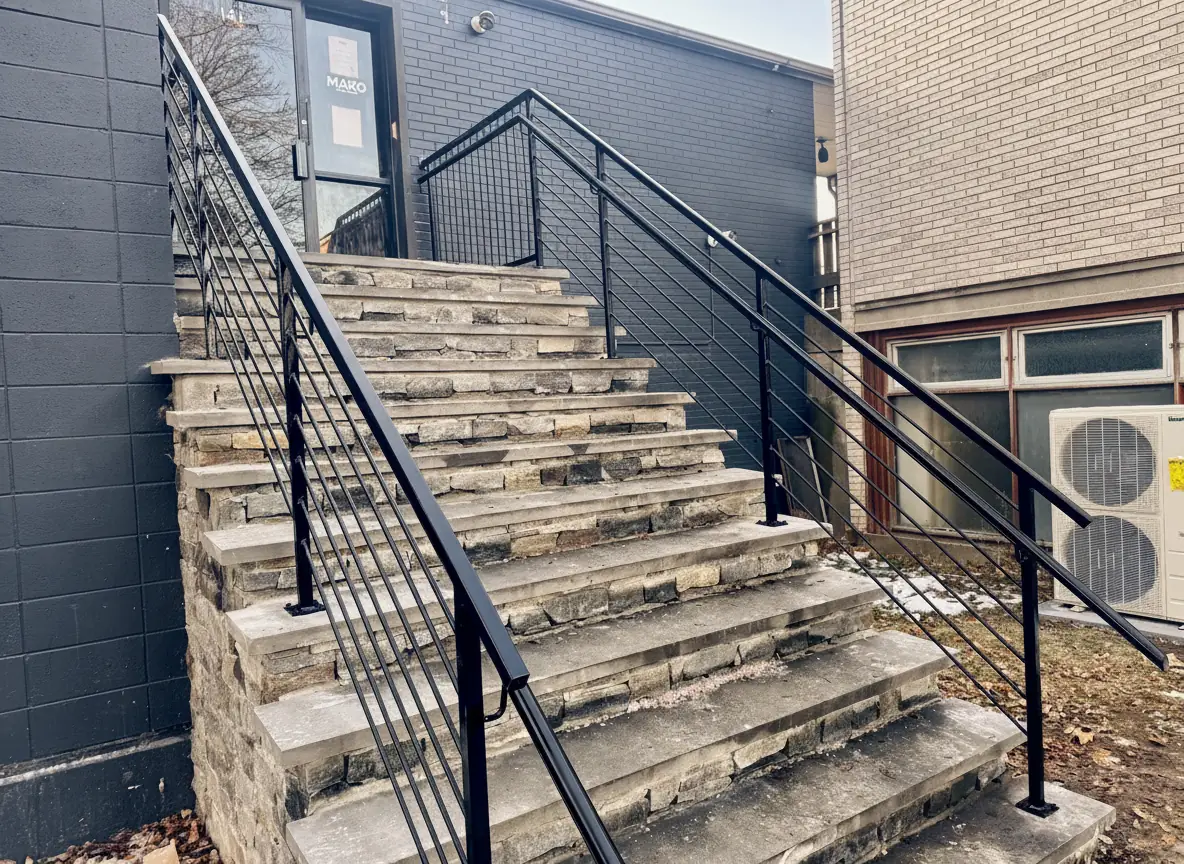
Who Needs ADA Railings?
ADA-compliant railings are required for:
- Commercial buildings and public spaces
- Restaurants and retail stores
- Medical offices and healthcare facilities
- Churches and places of worship (exempt from the ADA, but Rhode Island building code accessibility rules apply)
- Public and common-use areas of apartment and condominium buildings (the Fair Housing Act and building code may also apply)
- Schools and government buildings
- Homes needing accessibility upgrades (not required by the ADA, but built to ADA dimensions)
If you're a Rhode Island business owner or property manager, we can evaluate your property and help your railings meet ADA and local code requirements.
Commercial Railing Installation
We work with property managers, general contractors, architects, and business owners to design and install commercial-grade ADA railings. Our team handles projects of all sizes — from a single entrance handrail to full building railing systems. We work around your business schedule to minimize disruption.
ADA Handrail Requirements in Rhode Island
The Americans with Disabilities Act sets specific requirements for handrails in any facility open to the public. ADA-compliant handrails must be mounted between 34 and 38 inches above the floor or stair nosing, have a graspable diameter between 1.25 and 2 inches, provide a smooth continuous gripping surface with no sharp edges, and extend 12 inches horizontally past the top riser and one tread depth, at the stair slope, past the bottom riser. For ramps, handrails must extend 12 inches horizontally beyond the top and bottom of the ramp run. Rhode Island’s building code (RISBC-1, based on the 2021 IBC) adopts the IBC Chapter 11 accessibility requirements for commercial and public buildings. Iron Penguin Builders fabricates each ADA handrail to these dimensions.
Who Needs ADA-Compliant Railings?
Any facility covered under ADA Title III — which includes restaurants, retail stores, offices, medical facilities, gyms, hotels, and any other place of public accommodation — is required to meet ADA accessibility standards for handrails and railings. Assisted living facilities, nursing homes and rehabilitation centers also need accessible handrails, and multi-family buildings may need them in common areas under the Fair Housing Act and the building code. Homeowners also choose ADA dimensions for aging in place, recovery after surgery or permanent accessibility needs, even though the ADA doesn’t require them at home. Iron Penguin Builders works with property managers, general contractors, architects, and homeowners throughout Rhode Island on ADA railing projects of all sizes — from a single accessible entrance to full commercial railing systems.
Related Metal Railing Services
Need ADA-Compliant Railings? Contact Us for a Free Assessment
We'll evaluate your property, review your accessibility requirements, and provide a detailed estimate — all at no cost. Contact us today.