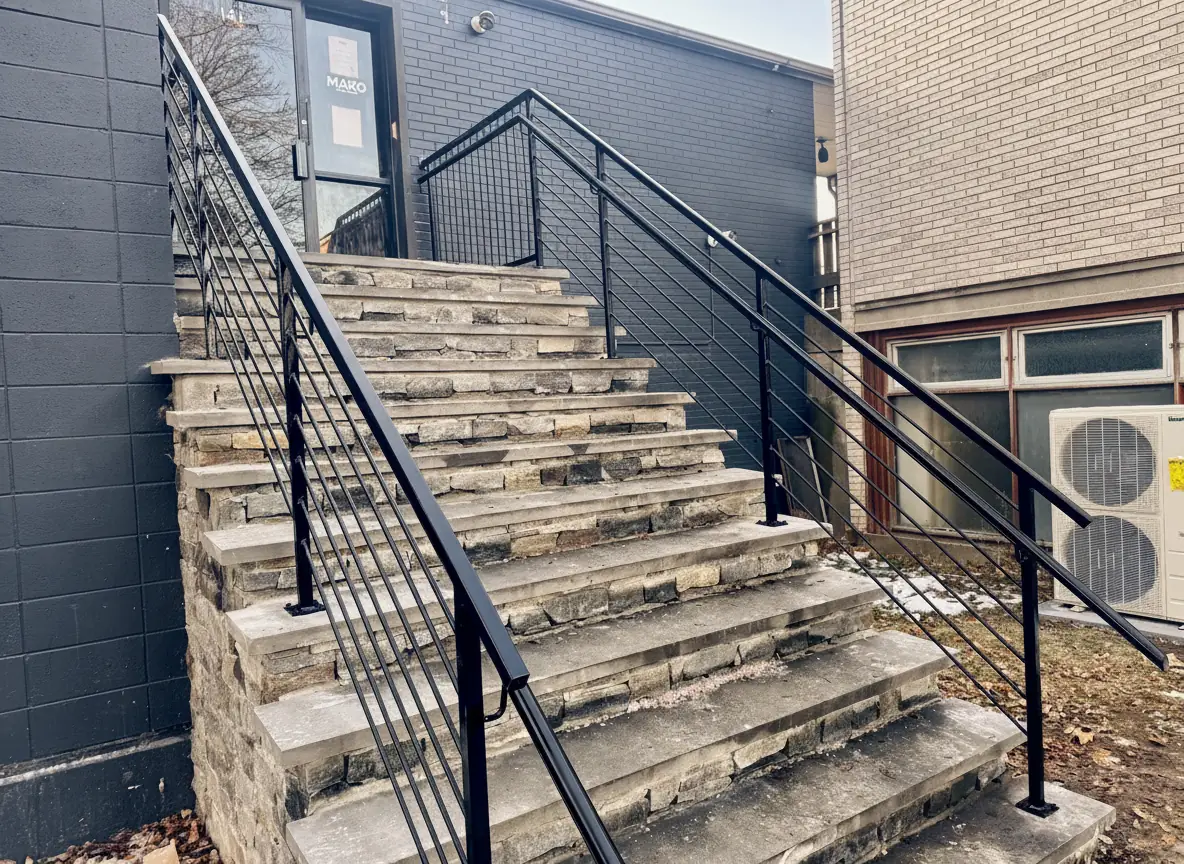
Balconies & Upper Decks
Custom Balcony Railing Installation in Rhode Island
Iron Penguin Builders installs custom balcony railings for homes, condos, and commercial properties across Rhode Island. We build them in wrought iron, aluminum, cable and stainless steel, designed to meet guard code and suit the building.
The Short Answer
Balcony railings are the guards around balconies on homes, condos and commercial buildings; in Rhode Island they must be at least 36 inches high on homes and 42 inches on commercial buildings, block a 4-inch sphere, and resist a 200-pound load at the top. Material depends on exposure and style: wrought iron, aluminum, cable or stainless steel. Iron Penguin Builders fabricates and installs balcony railings across Rhode Island, with free on-site estimates.
Key Facts
- Materials
- Wrought iron, aluminum, stainless steel cable, stainless steel
- Finishes
- Paint (several options), powder coating, hot-dip galvanizing, epoxy coatings or clear coat
- Guard height
- 36 in minimum residential (IRC); 42 in minimum commercial (IBC)
- Openings & loads
- No 4-in sphere passes; 200-lb concentrated load; plus 50 lb/ft on commercial guards
- Coastal balconies
- Aluminum or 316 stainless steel for salt-air exposure
- Service area
- All of Rhode Island, from the Warwick shop at 100 Bellows St
- Estimates
- Free on-site estimate; every project priced individually
Why Balcony Railings Matter
Balcony railings do two jobs: they keep people from falling, and they shape how the building looks. Rhode Island building codes require specific railing heights, baluster spacing, and structural load capacity for all balcony railings. Beyond code compliance, a balcony railing is one of the most visible parts of the exterior, so its design should suit the architecture. Iron Penguin Builders installs balcony railings that meet these code requirements and fit the style of the building.
Balcony Railing Materials
Wrought Iron
Ornamental balcony railings with pickets, scrollwork and traditional details.
Aluminum
Lightweight and doesn’t rust, which suits coastal balconies.
Cable Railing
Modern cable systems that maximize your view from the balcony.
Stainless Steel
Brushed or polished stainless steel for modern buildings; 316 grade near the coast.
Balcony Railing Code Requirements
Rhode Island’s building code adopts the 2021 International Building Code (IBC) and International Residential Code (IRC) for balcony railing requirements. Key requirements include a minimum railing height of 42 inches for commercial properties and 36 inches for residential, gaps small enough that a 4-inch sphere can’t pass through, and a 200-pound concentrated load (plus 50 pounds per linear foot on commercial guards). Iron Penguin Builders designs and builds balcony railings to these requirements.
How Are Balcony Railings Priced?
Balcony railing pricing depends on the material, total linear footage, design complexity, building height, and installation access. Second and third-story balconies may require specialized equipment for safe installation. We provide free on-site estimates where we assess your specific project and deliver an accurate written quote. Call (401) 677-7088 or request your free estimate online.
Related Metal Railing Services
Get a Free Estimate for Balcony Railings
Planning new balcony railings? Contact Iron Penguin Builders today for a free consultation and estimate.