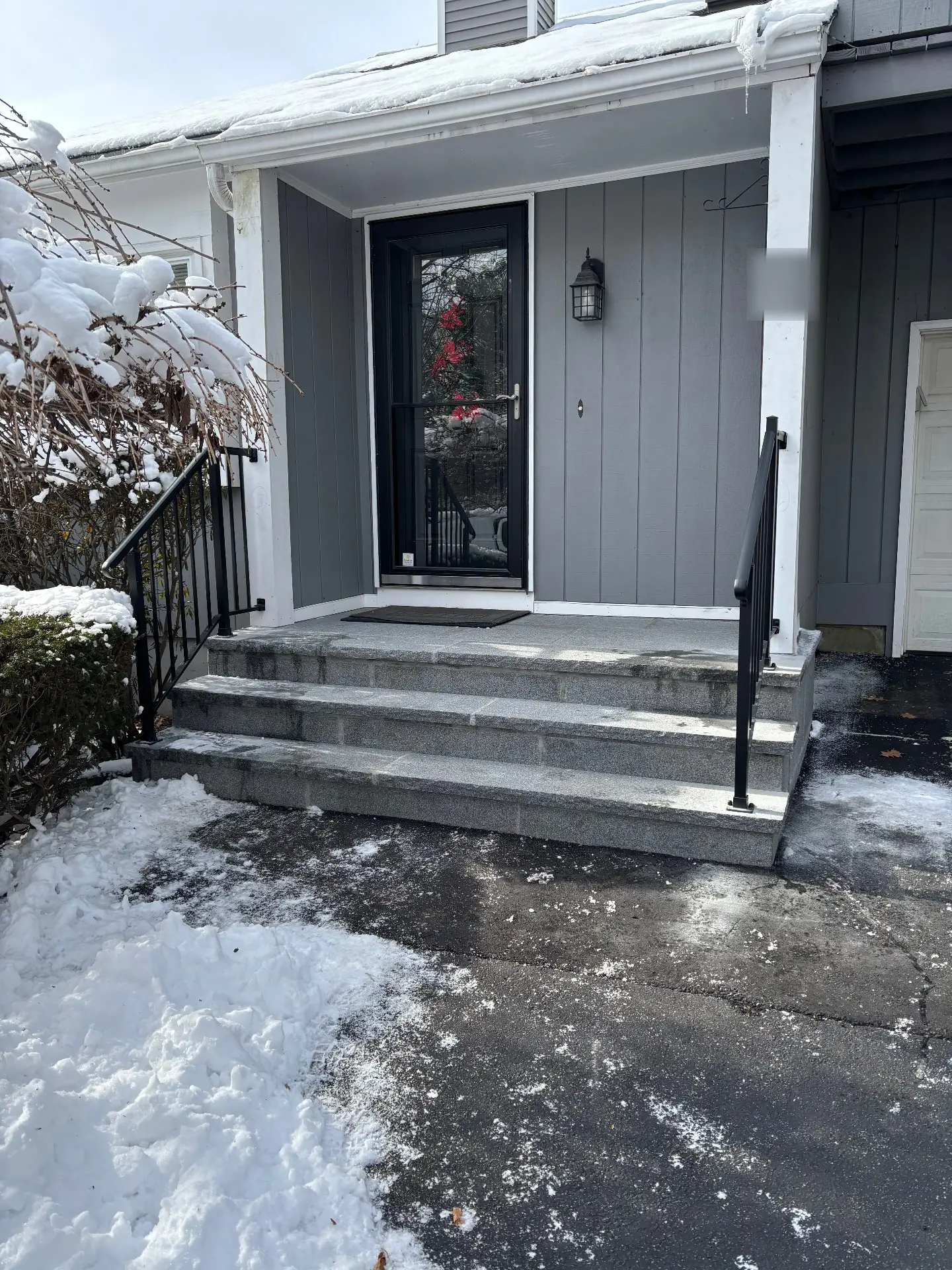
Outdoor Railings
Custom Porch & Deck Railings in Warwick, RI
Iron Penguin Builders builds custom metal railings for porches and decks. We fabricate and install durable, weather-resistant railings designed specifically for New England's tough climate. Powder-coated and hot-dip galvanized finishes protect the metal from rust, salt air and freeze-thaw damage.
The Short Answer
Porch and deck railings are the guards around raised outdoor floors; in Rhode Island, a porch or deck more than 30 inches above grade needs a guard at least 36 inches high with no opening that passes a 4-inch sphere. Outdoors the finish matters as much as the metal: powder-coated or hot-dip galvanized steel, aluminum and stainless cable all hold up to salt air and freeze-thaw. Iron Penguin Builders fabricates and installs metal porch and deck railings across Rhode Island, with free on-site estimates.
Key Facts
- Materials
- Powder-coated steel, aluminum, wrought iron, stainless steel cable; glass panel options
- Styles
- Traditional pickets, horizontal lines, cable rail, glass panels
- Finishes
- Paint (several options), powder coating, hot-dip galvanizing, epoxy coatings or clear coat
- Code basics
- Guard over 30 in above grade; 36 in minimum residential; 4-in sphere; 200-lb top-rail load
- Coastal properties
- Aluminum or 316 stainless for constant salt air; galvanized steel for maximum rust protection
- Service area
- All of Rhode Island, from the Warwick shop at 100 Bellows St
- Estimates
- Free on-site estimate; every project priced individually
Porch Railings
Your front porch is the first thing visitors see. A metal porch railing makes the entry safer and gives the front of the house a finished look. We design porch railings in styles ranging from classic New England wrought iron to clean contemporary lines. We match the railing design to the house, from historic colonials and ranches to modern builds.
Deck Railings
Deck railings in Rhode Island sit outside year-round in rain, snow, sun and, near the coast, salt air. We fabricate metal deck railings from steel or aluminum and powder coat them to resist fading, chipping and corrosion. We offer traditional picket styles, horizontal line designs, cable rail systems, and glass panel options.
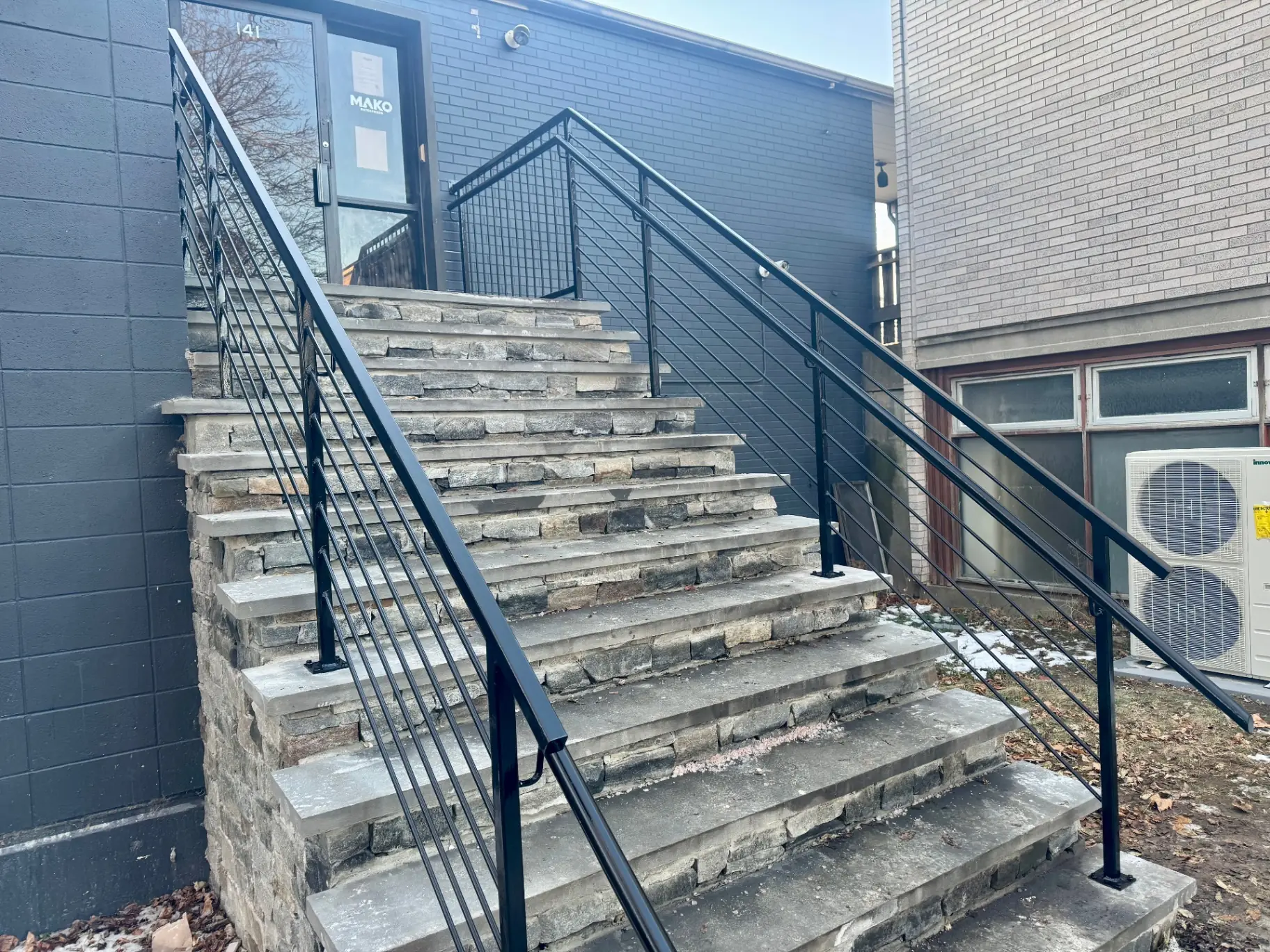
Built for New England Weather
We know what Rhode Island weather does to outdoor metalwork. That’s why every porch and deck railing we build gets a protective finish. Our powder-coated finishes create a tough barrier against moisture, UV rays, and salt air. For maximum protection, we also offer hot-dip galvanized finishes that provide long-lasting rust protection.
Code Compliance
All porch and deck railings meet Rhode Island residential building codes. Deck railings must be at least 36 inches high with gaps small enough that a 4-inch sphere can’t pass through. We build to these requirements and work with your local building inspector when an inspection is required.
Rhode Island Deck Railing Code Requirements
In Rhode Island, guardrails are required on any deck, balcony, or elevated surface more than 30 inches above grade. The Rhode Island State Building Code requires deck guardrails to be a minimum of 36 inches high for residential properties and 42 inches high for commercial applications, with baluster spacing preventing a 4-inch sphere from passing through. The top rail must be capable of withstanding a 200-pound concentrated load. Your city or town’s building department decides whether a permit and inspection are needed, so confirm before work starts. Iron Penguin Builders builds deck railings to current Rhode Island building code.
Best Metal Railing Material for Rhode Island Decks
Choosing the right railing material for a Rhode Island deck depends on your location, design preference, and how much maintenance you want to do. Powder-coated steel offers maximum strength and design flexibility — ideal for properties not directly on the coast. Aluminum is lightweight, naturally rust-resistant, and an excellent choice for coastal and waterfront properties that see constant salt air exposure. Stainless steel cable systems offer a modern look with outstanding corrosion resistance and minimal visual obstruction — perfect for waterfront decks in Newport, Barrington, and Bristol where preserving the view matters. Whatever the material, the railings we fabricate in our Warwick shop leave with a finish chosen for freeze-thaw cycles and coastal exposure.
Related Metal Railing Services
Ready for New Porch or Deck Railings? Get a Free Estimate
Tell us about your outdoor railing project and we'll provide a detailed, no-obligation estimate.