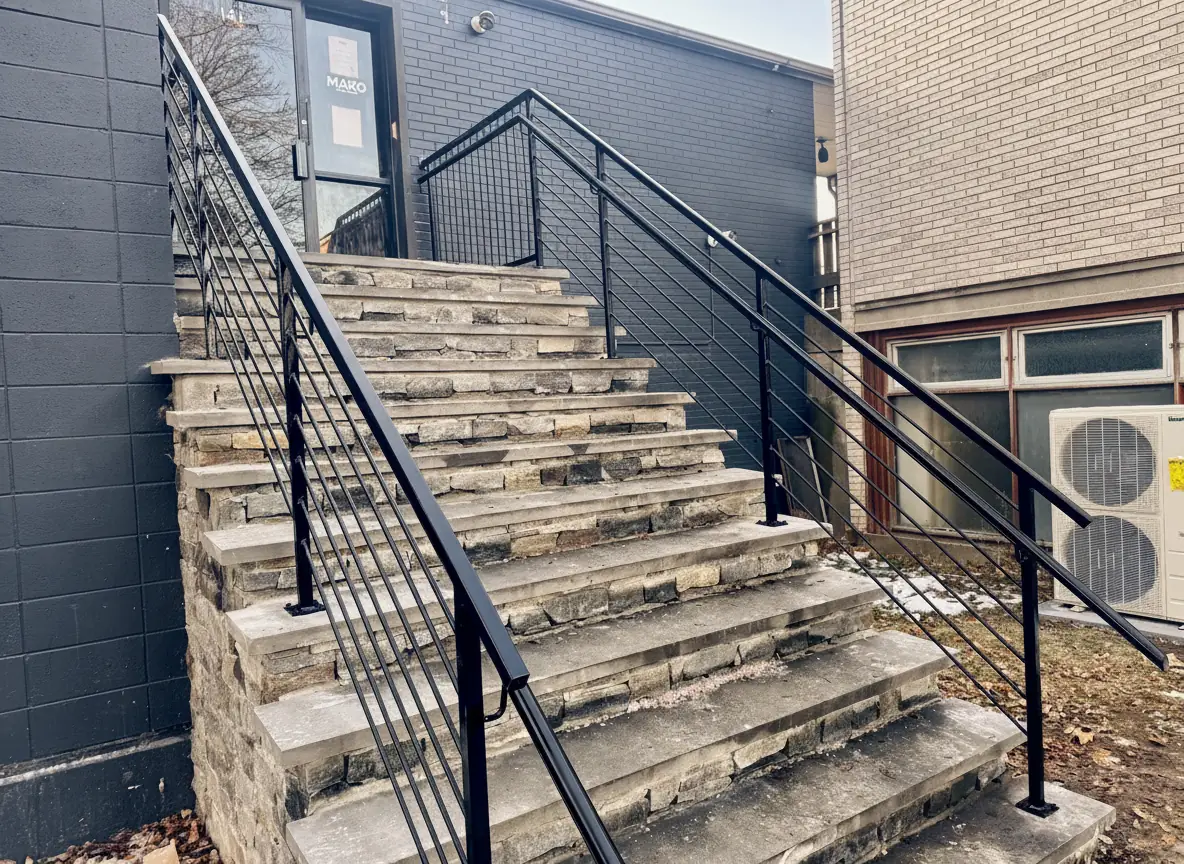
Modern Railing Design
Cable Railing Systems in Warwick, RI
Iron Penguin Builders designs and installs custom cable railing systems for homeowners and businesses throughout Warwick, RI and all of Rhode Island. Cable railings keep views open while meeting the guard height, opening and load rules in the building code. Our systems use 316 marine-grade stainless steel cable and custom fabricated metal posts.
The Short Answer
Cable railings use horizontal stainless steel cables strung between metal posts to make a guard that keeps views open on decks, stairs and balconies. Two things matter most: 316 marine-grade cable and hardware for Rhode Island’s salt air, and posts and tension that keep every opening smaller than a 4-inch sphere, even when the cables are pushed. Iron Penguin Builders fabricates custom posts and installs cable railing systems across Rhode Island, with free on-site estimates.
Key Facts
- Cable
- 316 marine-grade stainless steel
- Posts
- Custom fabricated steel, aluminum or stainless steel
- Top rail & hardware
- Metal, wood or composite top rail; stainless tensioners, turnbuckles and fittings
- Code basics
- No opening may pass a 4-in sphere, including under load; 36 in residential, 42 in commercial
- Common uses
- Waterfront decks, balconies, interior stairs, commercial spaces, pool areas (separate pool barrier still required)
- Service area
- All of Rhode Island, from the Warwick shop at 100 Bellows St
- Estimates
- Free on-site estimate; every project priced individually
Why Choose Cable Railings?
Cable railings are a common choice for modern homes and commercial spaces. The thin horizontal cables block very little of the view, which is why they are used on waterfront properties, raised decks and balconies. Properly tensioned with correctly spaced posts, cable railings are strong and meet residential and commercial guard codes.
Where Cable Railings Work Best
Waterfront Decks & Patios
Keep ocean, bay or pond views open.
Second-Story Balconies
Thin cables block less of the view than pickets.
Interior Staircases
Create a modern, open floor plan aesthetic.
Commercial Spaces
Restaurants, offices, and retail with contemporary design.
Pool Areas
Keep pool views open (a separate code-compliant pool barrier is still required).
Our Cable Railing Materials
Posts
Custom fabricated from steel, aluminum, or stainless steel.
Cable
316 marine-grade stainless steel for maximum corrosion resistance.
Hardware
Stainless steel tensioners, turnbuckles, and fittings.
Top Rail
Metal, wood, or composite options available.
How Are Cable Railing Systems Priced?
Cable railing pricing varies based on the scope of your project — total linear footage, post material and spacing, whether you need custom fabricated posts or standard profiles, cable count per panel, and site-specific installation requirements. Coastal properties call for 316 marine-grade stainless steel components, which resist salt-air corrosion better than 304. Inland properties may have different requirements based on exposure and design preferences. Because every installation is unique, we don't publish standard rates — instead we offer a free on-site estimate where we assess your specific project, recommend the right materials for your environment, and give you an accurate written quote with no obligation. Call (401) 677-7088 or request your free estimate online.
Are Cable Railings Code Compliant in Rhode Island?
Yes — cable railing systems are permitted in Rhode Island for both residential and commercial applications when designed and installed to meet the Rhode Island State Building Code. The key requirement is the 4-inch sphere rule: cables must be tensioned tightly enough that a 4-inch sphere cannot pass through the opening between cables. Post spacing, post height, and structural attachment methods must also meet code specifications. For commercial properties, additional requirements may apply depending on occupancy type and local amendments. We design each system to the current Rhode Island State Building Code, and your building department decides whether a permit and inspection are needed.
Related Metal Railing Services
Get a Free Estimate for Cable Railings
Interested in a cable railing system for your deck, balcony, or staircase? Contact us today for a free consultation and estimate.